Sri Lanka Hosts International Jazz Festival in Galle

Sri Lanka Hosts International Jazz Festival in Galle

Galle, a UNESCO World Heritage site, is hosting the International Jazz Festival. This event attracts jazz and blues fans worldwide. It showcases over 40 international and 50 Sri Lankan artists.
Sri Lanka Hosts International Jazz Festival in Galle

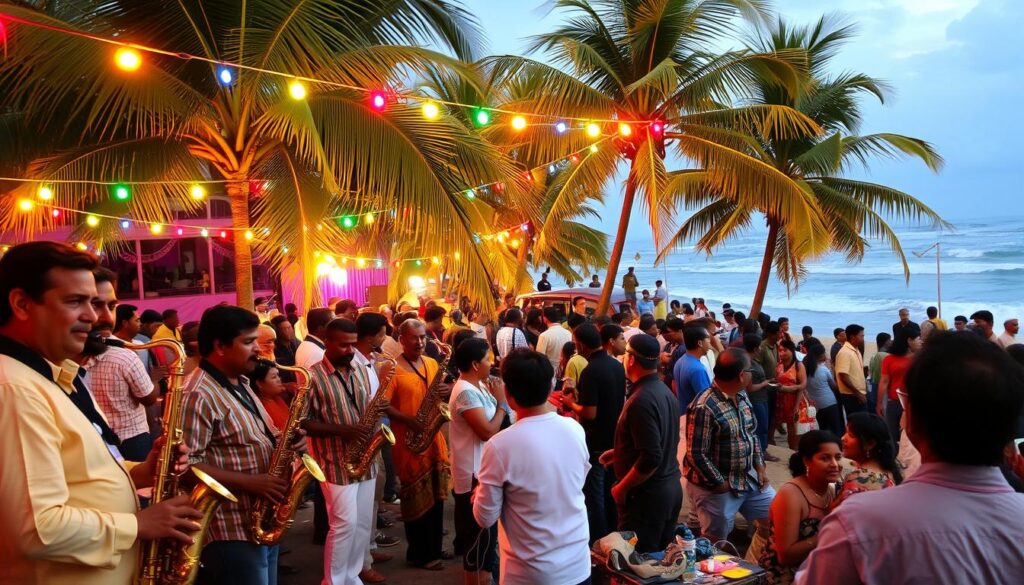
The Galle Jazz Festival lasts 12 hours, offering a full experience. Visitors can enjoy live music, great food, and fine wine. The atmosphere mirrors the lively streets of New Orleans.

The festival features famous international acts and talented local artists. This mix highlights the diversity of jazz and blues genres. The event is expected to draw many visitors to Galle.

Galle’s colonial architecture and seaside setting create a perfect backdrop. This world-class music festival boosts Galle’s status as a cultural hub. It cements the city’s reputation for hosting international events.

Key Takeaways

  • Galle, a UNESCO World Heritage site, hosts the International Jazz Festival
  • The festival features over 40 international and 50 Sri Lankan artists
  • The event spans 12 hours and includes live performances, food, and wine
  • The festival atmosphere is reminiscent of the lively streets of New Orleans
  • The event highlights Galle as a top tourist attraction and cultural hub in Sri Lanka

Galle Welcomes Global Jazz and Blues Artists

Galle is hosting a spectacular jazz festival featuring top international acts. The event showcases the vibrant Sri Lankan jazz scene. Mainstage Events organizes this celebration of world-class music in the picturesque coastal town.

Festival Attracts Top International Acts

The festival lineup includes renowned British acid jazz band Incognito, led by Bluey. Other global acts are Marco Mendoza, Holly Perkins and the Diablos, and the Kevin Davy quartet.

Mud Morganfield, son of Muddy Waters, will perform classic blues songs. His tribute album “For Pops: A Tribute To Muddy Waters” will be featured.

Local Jazz Scene Showcased Alongside Global Talent

Sri Lanka’s thriving jazz scene shares the stage with international artists. Local performers include Geoffrey Fernando of Purple Rain and Jerome Speldewinde. The jazz sextet Brown Sugar will also showcase their talent.

This blend of global and local talent highlights Sri Lanka’s rich musical heritage. It also shows the country’s growing prominence in the international jazz community.

The festival offers nearly ten hours of jazz daily at the iconic Galle Face Hotel. Day passes cost 5000 LKR, while weekend passes are 8000 LKR. For ticket information, contact Amrik at +94777397818.

Galle Fort Provides Stunning Backdrop for Festival

The historic Galle Fort hosts the International Jazz Festival in Sri Lanka. This UNESCO World Heritage site blends Portuguese and Dutch architecture. Its charm creates an unforgettable experience for festival-goers.

Galle attracts culturally curious and creative minds. The Galle Jazz Festival took place in November 2014. It featured classic and modern jazz from international and local acts.

The French quintet Olivier Franc and local band Noctua were among the performers. The festival showcases Galle’s rich heritage and multicultural influences.

Festival Boosts Galle’s Cultural and Tourist Appeal

The Galle Jazz Festival draws visitors from around the world. It highlights the city’s Dutch, Portuguese, British, and indigenous cultural mix. The event provides a stage for traditional and modern artistic expressions.

Event Highlights Sri Lanka’s Growing Jazz Scene

The festival spotlights Sri Lanka’s expanding jazz scene. It offers local artists chances to work with international performers. The event aims to bring fresh experiences to Sri Lankan arts and music.

The Galle hospitality industry thrives with events like the Jazz Festival. Visitors are drawn to iconic venues such as the Galle Fort Hotel. The Owl and the Pussycat hotel is known for its unique suites.

This hotel supports the arts through the Edward Lear Prize for Poetry. The prize is part of the Galle Literary Festival.

Festival Offers Unique Blend of Music, Food, and Culture

The International Jazz Festival in Galle, Sri Lanka, is a celebration of jazz and blues music. This event takes place at the historic Galle Fort. It offers a mix of music, food, and culture that draws visitors worldwide.

The festival features international and local jazz artists. It also includes a “Feastival” with specialty foods and drinks. Renowned chefs, wine, and champagne bars make it a culinary delight.

The event’s appeal goes beyond the stage with a homegrown design fair. Visitors can explore Sri Lankan art and crafts while enjoying music. This blend creates a unique atmosphere celebrating the region’s heritage and vibrancy.

The festival offers diverse experiences for music lovers, foodies, and culture fans. The stunning Galle Fort backdrop adds to its charm. It showcases the best of music, cuisine, and art in Sri Lanka.

As the festival grows, it continues to attract visitors seeking a unique cultural experience. It has become a premier event in Sri Lanka, offering something for everyone.

Buddhist Monks Lead Sri Lanka Protests: Key Questions Emerge

Buddhist Monks Lead Sri Lanka Protests: Key Questions Emerge

The noise from civil disobedience in Sri Lanka grew louder with Buddhist monks joining in. They showed the socio-political influence of Buddhism in the country. When people protested, leading to President Gotabaya Rajapaksa stepping down, monks were there. They stood with Tamils, Muslims, Christians, and Sinhala Buddhists to speak out against poor government decisions. This shows monks taking a stand is shaking up their traditional role in society.

Venerable Mahayaye Vineetha from Kandy has sparked talks on monks getting into politics. This change from religious roles to activist ones has people talking. As religion and politics mix, monks have backed political leaders and joined nationalist movements. This has sometimes led to tough talk.

Some question if monks should be in protests, given their roles. The naming of a controversial monk to a government group, and support for violence by some, highlights this debate. Still, many in Sri Lanka, especially young people, see the monks’ role in protests positively. They hope, though, that monks won’t dive too deep into politics.

Monks’ role in Sri Lanka protests raises familiar questions

Key Takeaways

  • Monks are key in Sri Lanka’s fight against bad economic decisions.
  • The influence of Buddhism shapes the country’s politics and people’s thoughts.
  • Monks joining protests have caused some disagreement among supporters.
  • Religious leaders often become political allies, impacting Sri Lankan nationalism.
  • There’s debate on how closely monks should link with politics.

To understand more about Sri Lanka’s economy, check out market trends and the strengthening of the Sri Lankan Rupee against the US dollar.

Monks’ Identity Transforms from Spiritual Leaders to Activists

In Sri Lanka, Buddhist monks have shifted from being spiritual leaders to key activists. This change shows monks taking a more active political role, moving away from their previously neutral position. This recasts how people see their involvement in societal issues.

Historical Role of Buddhist Monks in Sri Lankan Politics

Buddhism has long been linked with Sri Lankan politics. Monks worked as advisors to kings before colonial times and have been part of politics ever since. They played a big role in the movement for independence and the establishment of Sinhalese-majority policies after 1948.

Controversial Monk Appointments and Political Alliances

Buddhist monks have taken on more controversial political roles lately. Monks like Galagoda Atte Gnanasara, with their divisive views, held significant government positions. This shows the complicated relationship between monk leadership, public unrest, and politics. Their stance on economic and social issues puts them in a spot beyond just spiritual leadership.

Society’s Changing Perception of Monastic Engagement in Protests

The view of monks as activists has greatly changed. They were once seen as moral guides. Now, their involvement in protests has reshaped their image.

Monks previously in alliance with political powers have been pushed out of protests. This reflects growing doubts about their influence on politics. Yet, people still respect their spiritual advice, showing mixed feelings about their activism.

In conclusion, Buddhist clergy activism in Sri Lanka shows how spiritual leaders are getting more involved in politics. Their evolving role marks a significant change in both religious and national arenas.

###

Buddhism’s Influence on Sri Lankan Socio-Political Landscape

Buddhism has deeply influenced Sri Lanka, intertwining religion and politics. Monks have grown into significant figures beyond spiritual roles. OMP Sri Lanka’s study shows monks are more active in politics now than before. Some support strict policies linked to the Rajapaksas, while others push for progressive change and communal wellness.

In incidents like the one in Batarramulla, the tension between Buddhism and government came to light. A monk, once allied with Rajapaksa, was criticized during protests. Feelings about religion’s role in politics are mixed. This split goes back to Anagarika Dharmapala and is worsened by events like the 2019 Easter bombings, the civil war, and controversial policies such as forced cremations during Covid-19.

Yet, Buddhism’s presence in daily life is strong. Temples serve as schools and help poor families. Young protesters and citizens welcome monks’ greater civic role. But, worries about monks gaining too much power are there, especially with the Rajapaksas regaining control. This tension between religion and state power continues to influence Sri Lanka’s governance and society.

Sri Lanka Reverses Organic Farming Policy Amid Crisis

Sri Lanka Reverses Organic Farming Policy Amid Crisis

Sri Lanka’s government has lifted its ban on chemical fertilizers. This reversal comes amid a severe economic crisis and widespread food shortages. The ban, implemented in May 2021, aimed to make Sri Lanka fully adopt sustainable farming practices.

Rice yields, a staple in Sri Lanka, dropped by 40-50% nationwide. This decrease happened during the Maha growing season after the organic policy started. Sri Lanka had to import 300,000 metric tonnes of rice in just three months.

The new policies have hurt Sri Lankan farmers financially. Many can’t afford essential farming inputs, and some have stopped farming altogether. Food inflation is around 30% and expected to rise further.

Foreign reserves have shrunk to $1.8 billion. This makes it hard for the government to afford imports, including fertilizers. Experts call the food crisis a “man-made disaster”.

Increased hardships are expected in the coming months. Children and pregnant women are particularly at risk. The government is trying to address growing concerns about food availability and accessibility.

Impact of Fertilizer Ban on Sri Lankan Farmers

Sri Lanka’s 2021 chemical fertilizer ban has severely affected smallholder farmers. The ban aimed to reduce imported fertilizer dependence and promote organic farming. However, it resulted in widespread crop failures and decreased agricultural output.

Before the ban, 2 million Sri Lankan farmers relied on subsidized chemical fertilizers. The abrupt shift to organic farming left many struggling to adapt. Some farmers experienced a 50-60% decrease in harvests, devastating their incomes.

Many farmers now can’t afford essential farming inputs like pesticides and equipment. This has made it hard for them to maintain their farms and livelihoods.

Inability to Afford Farming Inputs

The fertilizer ban and economic crisis have made it tough for farmers to buy necessary inputs. Many have taken high-interest loans for pesticides and other essentials. This has worsened their financial situation.

Lack of affordable farm subsidies has left many unable to sustain their farms. This has led to widespread poverty and food insecurity in rural areas.

Farmers Abandoning Cultivation

Many smallholder farmers in Sri Lanka have decided to quit farming altogether. Reduced crop yields and increased input costs have made it impossible to sustain their farms.

Farmers are now seeking alternative income sources, often in urban areas. This trend has significantly reduced agricultural output across the country. It’s contributing to ongoing food shortages and economic instability.

Government Reverses Organic Farming Policy Amidst Food Shortages

Sri Lanka’s government has recognized the need to change its organic farming policy. President Gotabaya Rajapaksa admitted mistakes that require fixing to address food security issues. The goal is to boost domestic food production and ease growing protests.

The government has asked the World Bank for help to buy fertilizers. They plan to bring back subsidies for farmers. However, the details of these changes are still unclear.

Farmers remain doubtful about the government’s ability to keep its promises. This is due to the severe shortage of foreign currency in the country.

The chemical input ban has severely impacted crop yields. The last maha seasonal harvest dropped by 37% compared to the previous year. This is the lowest yield since 2003/04.

Food insecurity has affected about 6.3 million people in Sri Lanka as of September 2022. Food inflation has reached a staggering 94.9%.

To tackle the crisis, Sri Lanka secured a $55 million credit line from India Exim Bank. This money will be used to purchase fertilizers.

The government also had to pay $6.87 million for unsuitable organic fertilizer from China. This was due to their short-lived organic farming policy.

IFOAM – Organics International is organizing workshops to support Sri Lanka. These aim to help the country transition to organic agriculture more sustainably. The focus is on reforms that prioritize food security and domestic production.

Economic Crisis Exacerbates Agricultural Challenges

Sri Lanka’s economic crisis has worsened farmers’ struggles after the organic farming policy. Foreign reserves are low, and inflation is high. Shortages of fuel, food, and medicine have become common.

The country’s foreign debt skyrocketed from $11.3 billion in 2005 to $56.3 billion in 2020. In 2021, it reached 119% of the GDP. Sri Lanka defaulted on its debt in April 2022.

Rising fuel costs make it hard for farmers to grow and transport crops. Power cuts disrupt irrigation and milling. The government raised taxes to increase revenue.

Experts warn that food access and affordability will remain big issues. Vulnerable populations may face increased malnutrition. Many farmers are abandoning their livelihoods due to these challenges.

Globally, 193 million people faced food insecurity in 2021. In East Africa, 265 million live on less than $1.90 per day. About 40% of the population there has poor access to food.

A review of recent literature shows urgent need for solutions. These must address the complex issues facing Sri Lankan farmers and the broader population.

Ranil Wickremesinghe Sworn in as Sri Lanka’s New President

Ranil Wickremesinghe Sworn in as Sri Lanka’s New President

In a highly secured parliamentary complex, Ranil Wickremesinghe was inaugurated at 73. He became the New President of Sri Lanka. This event marks the start of a new chapter in the country’s politics. Despite his connection to the controversial Rajapaksa regime, which many blame for financial woes, Wickremesinghe takes the reins. His leadership comes as protests calm, thanks to a strong parliament vote of 134 to 82.

He promises peace and order as Sri Lanka‘s eighth executive president. Wickremesinghe vows to bring change and stability during ongoing political crisis.

Ranil Wickremesinghe will serve as president until November 2024, showcasing a pivotal moment. Sri Lanka faces severe economic challenges, including inflation and shortages. The new leader’s priority is to kickstart the economy and restart talks with the International Monetary Fund. They hope to secure a $3 billion bailout.

The nation’s path forward relies on Wickremesinghe’s policies and reforms, states former Speaker Karu Jayasuriya. He underscores the need for a multi-party interim government to address these challenges swiftly.

As Wickremesinghe prepares for his role, he faces a nation of diverse communities. He targets education reforms as critical to recovery and growth. The entire country watches closely, hoping for effective governance.

Key Takeaways

  • Ranil Wickremesinghe was inaugurated as the New President of Sri Lanka within the parliament complex.
  • He won the presidency with 134 votes, serving until November 2024 as the nation’s eighth executive president.
  • Sri Lanka’s economic crisis has incited widespread protests and a public demand for governmental change.
  • Wickremesinghe, with a 45-year-long parliamentary career, has the urgent task of steering the country towards economic recovery.
  • Implementing educational reforms sustains as a focus in preparing for a resilient future workforce in Sri Lanka.
  • Former Speaker Karu Jayasuriya has called for reforms and suggests a multi-party interim government for economic stability.

A Tumultuous Path to Presidency

In recent years, Sri Lanka faced a huge Economic Crisis. This crisis led to a big Political Change. High inflation and the lack of basics caused major Protests. This made people ask for new Leadership.

The Economic Crisis Leading to Political Change

This tough situation made citizens very upset. They protested against the government’s failure to fix the economy. These conditions prepared the ground for big political shifts. It brought new leaders into the Sri Lanka President race.

Protests and the Departure of Gotabaya Rajapaksa

Many complaints led to big protests. The protests wanted changes and responsibility. They played a key role in Gotabaya Rajapaksa‘s exit. He left the presidency amid scandals and poor economic decisions. This forced him to resign and leave Sri Lanka.

Ranil Wickremesinghe’s Controversial Path to Leadership

Ranil Wickremesinghe’s rise to power was full of disagreements. Going from Prime Minister to the Controversial Acting President role, then President, was tough. This period included a state of emergency and the military stopping protests at government places. His journey promised a chance to improve the economy during chaos.

During this time, elections brought big changes and reform promises. For more details, check out OMP Sri Lanka. They have an article about President Anura Kumara Dissanayake’s decisive moves.

The future is still unclear, but there’s hope for better leadership in Sri Lanka. People want leaders who put the country first, not their own needs.

Public Reception and Political Backdrop

Ranil Wickremesinghe became Sri Lanka’s president during a tough time. The country, home to 22 million, is facing a big crisis. People have mixed feelings about him. Some hope he will improve things, while others doubt it. Wickremesinghe has been prime minister six times. He’s now leading the nation through severe economic problems.

Many people didn’t like the choice of Wickremesinghe as president. They wanted big changes, not someone close to the old government. There have been big protests in Colombo since April 9. But Wickremesinghe is trying to fix the economy. He is talking to the IMF and World Bank. This is like when he got $4.5bn in help in the early 2000s.

Wickremesinghe’s state of emergency move shows how serious the situation is. Sri Lanka badly needs good leadership now. Wickremesinghe is skilled in dealing with other countries. This will help him as he talks to the IMF and countries like China and India. But everyone will watch him closely. They want to see if he can bring the country together and solve the debt problems.

Sri Lankan Authorities Detain Hindu Worshippers

Sri Lankan Authorities Detain Hindu Worshippers

A recent event has caused a lot of talk. Sri Lankan Authorities Detain Hindu Worshippers, bringing up big worries about religious freedom violations and how minority groups are treated. This shows the big issues with Sri Lanka human rights.

During a festival, eight Tamil Hindu worshippers were arrested at the Veddukkunari temple near Vavuniya. They were taken while doing their rituals and kept for a long time. This event highlights the problems minorities in Sri Lanka face.

The arrests made people question the authorities’ actions, as there was earlier approval for the festival. Even though there were concerns about ritual fires causing damage, the court later freed the worshippers. This made people wonder if the arrests were right.

Amid these issues, it’s important to remember that Sri Lanka is also dealing with a big economic crisis. This makes the situation even harder for the country.

Sri Lankan Authorities Detain Hindu Worshippers

Key Takeaways

  • Authorities’ detention of Hindu worshippers raises concerns over religious freedom in Sri Lanka.
  • The incident at Veddukkunari temple reflects broader issues of minority rights.
  • Legal precedents for religious festivals clash with governmental actions.
  • The role of nationalist groups and government agencies in minority oppression is under scrutiny.
  • Sri Lanka’s economic struggles may compound its human rights challenges.
  • International awareness and dialogue are crucial for remedying religious freedom violations in Sri Lanka.

Violation of Religious Freedom in Sri Lanka: Hindu Worshippers’ Rights Breached

In Sri Lanka, the right to practice religion freely is under threat. This is especially true for the Tamil Hindu community. They face many challenges due to disputes over religious sites. The Department of Archaeology and the Tamil community often clash. This is over claims of Buddhist temples being built on Tamil lands.

Recent data from 2023 shows a worrying trend in the north and east of the island. The Department of Archaeology, with help from the Ministry of Defense, has tried to build Buddhist temples on lands owned or used by Tamil Hindus 37 times. This has sparked religious tension and added to the conflict between different cultural and religious groups.

This issue is raising alarms among human rights groups, both locally and worldwide. They call for balance and respect for the rights of the Tamil minority. Such disputes show a problematic pattern that could lead to deeper divisions in society if not handled properly.

The situation could impact the 12.6% of Sri Lanka’s population that follows Hinduism. The nation’s constitution also recognizes Buddhism, Islam, and Christianity. But, it places Buddhism in a special position. This often leads to favoritism in public policy and affects the Tamil Hindus’ religious and cultural lives.

Given these complex issues, it’s critical for Sri Lanka to uphold human rights and religious freedom. Fair treatment of all religious groups is a must. Laws must be strengthened and applied fairly to foster peace among Sri Lanka’s diverse religious communities.

By recognizing these challenges and striving for legal and social changes, Sri Lanka can hope for harmony. It’s essential for respecting all religious traditions equally. This is key for Sri Lanka’s advancement in the global human rights arena.

Sri Lankan Authorities Detain Hindu Worshippers During Veddukkunaari Temple Rituals

Sri Lanka is at a crossroad, balancing religious freedoms and human rights. The nation, rich in culture and religion, faces issues. Recent events at the Veddukkunaari temple have raised concerns. Hindu worshippers were detained, affecting Tamil minority rights. This action underscores ongoing religious freedom violations.

Contextual Background of the Veddukkunaari Temple Controversy

The Veddukkunaari Temple is important to Hindu Tamils. Sinhala Buddhist monks claimed the site, with government support. This has caused tension and raised human rights issues. The Hindu religious practices there are historic. The conflict has led to legal consequences for the local community.

Legal Developments and Court Rulings for Detained Worshippers

Hindu worshippers were mistreated after their detainment. There was a public outcry and legal intervention. Courts ruled in favor of releasing the detainees. These incidents highlight the importance of religious freedom and minority rights in Sri Lanka.

The Role of Nationalist Buddhist Monks and Government Agencies

Nationalist Buddhist monks and the military attended a temple event. Their presence raised concerns over freedom and community division. These monks and agencies have taken actions that limit religious practices.

Tamil Hindu Minority: Targeted Traditions and Religious Practices

The Tamil Hindu Minority faces challenges. Their religious spaces and rituals are targeted. This leads to religious conflict and human rights issues. A respectful solution for all religious identities is needed in Sri Lanka.

OMP Sri Lanka keeps the world informed about these issues. They provide updates on religious freedom and human rights in the country. It’s important for the public to stay informed.